Aeronautical Engineer • UAV Control Systems • Flight Dynamics

Ahsanul Resam

Aeronautical Engineering Graduate and UAV Autopilot Developer

Turning aerodynamic theory, flight dynamics, and control-system design into practical autonomous aircraft solutions.

Open to engineering, research, and postgraduate opportunities

NAV / CONTROL WAYPOINT TRACK
Profile

Who I Am

I am Ahsanul Resam, an Aeronautical Engineering graduate from Aviation and Aerospace University Bangladesh. My primary interests are flight dynamics, fixed-wing UAVs, autonomous flight control, aircraft design, and practical engineering development.

My academic and project work has focused on developing a complete autonomous fixed-wing UAV autopilot. The project covered aerodynamic analysis in XFLR5, stability-derivative extraction, mathematical and state-space modelling, PID, LQR, and LQI controller design, MATLAB and Simulink validation, FlightGear visualization, waypoint navigation, and PX4/Pixhawk 6C integration through software-in-the-loop and hardware-in-the-loop testing.

I also gained practical aircraft-manufacturing experience through the AIAA Design/Build/Fly 2024–2025 competition, where I contributed to structural-part manufacturing, glass-fibre lamination, and final aircraft assembly. In another conceptual aircraft project, I worked on aircraft configuration and hydrogen PEM fuel-cell propulsion selection.

I enjoy connecting engineering theory with real systems. My goal is to continue developing reliable aerospace and mechanical systems while expanding my knowledge through research, professional engineering work, and postgraduate study.

Education B.Sc. in Aeronautical Engineering
University Aviation and Aerospace University Bangladesh
CGPA 3.40 out of 4.00
Location Bangladesh
Primary Focus UAV Flight Control and Autonomous Systems
Current Direction Engineering, research, and postgraduate opportunities
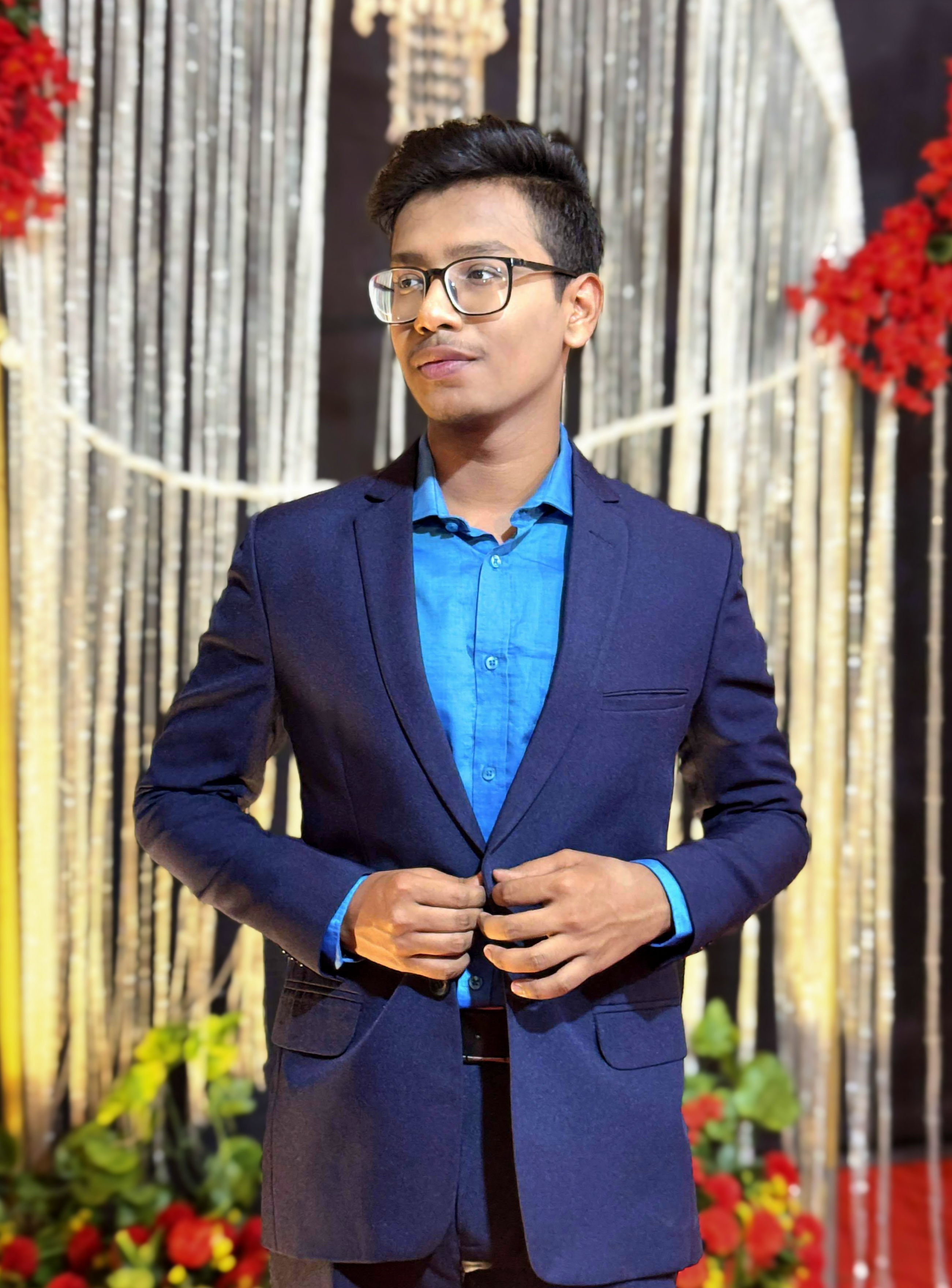
Portrait of Ahsanul Resam
Aeronautical Engineer Ahsanul Resam
Technical Capability

Engineering Skills

A multidisciplinary foundation across aircraft analysis, control systems, simulation, autonomous flight, and practical manufacturing.

Flight Dynamics and Aerodynamics

Aircraft Stability and Control Aerodynamic Derivatives State-Space Modelling Longitudinal and Lateral Dynamics XFOIL XFLR5 MIL-F-8785C Analysis

Control Systems

PID Control LQR LQI Cascaded Flight-Control Architecture Attitude Control Altitude Control Heading and Roll Control Waypoint Guidance

Software and Simulation

MATLAB Simulink FlightGear PX4 QGroundControl Software-in-the-Loop Hardware-in-the-Loop

Engineering and Manufacturing

Aircraft Structural Manufacturing Glass-Fibre Lamination Final Aircraft Assembly Conceptual Aircraft Design Technical Documentation Engineering Presentation
Development Path

My Journey

From learning the fundamentals of aircraft engineering to developing and validating an autonomous fixed-wing UAV control system.

Stage 01

Building the Engineering Foundation

Started studying Aeronautical Engineering and developed a foundation in aerodynamics, aircraft structures, propulsion, flight mechanics, mathematics, and engineering analysis.

Stage 02

Moving from Theory to Aircraft Design

Began applying academic knowledge through aircraft geometry development, airfoil analysis, aerodynamic-performance evaluation, stability analysis, and conceptual aircraft design.

Stage 03

Gaining Manufacturing Experience

Worked as part of the AIAA Design/Build/Fly 2024–2025 team. Contributed to structural-part manufacturing, glass-fibre lamination, airframe preparation, and final assembly.

Stage 04

Entering Flight Dynamics and Control

Studied longitudinal and lateral aircraft dynamics, aerodynamic derivatives, stability modes, state-space representation, controllability, observability, and feedback-control principles.

Stage 05

Developing a Fixed-Wing UAV Autopilot

Helped develop a complete control architecture using PID, LQR, and LQI methods for pitch, altitude, roll, heading, and waypoint-following tasks.

Stage 06

Connecting Simulation with Real Flight Hardware

Integrated the controller with MATLAB/Simulink, FlightGear, PX4, QGroundControl, and Pixhawk 6C. Conducted software-in-the-loop and hardware-in-the-loop validation.

Stage 07

Current Direction

Now focused on expanding expertise in aerospace and mechanical engineering, autonomous systems, flight control, research, and postgraduate education.

Selected Engineering Work

Featured Projects

Selected projects demonstrating aircraft design, control-system development, simulation, manufacturing, and technical problem-solving.

Final-Year Thesis Project PROJECT 01

Autonomous Fixed-Wing UAV Autopilot

Designed and validated an end-to-end autonomous flight-control workflow for a fixed-wing UAV, beginning with aerodynamic modelling and ending with real-time autopilot integration.

Main Contributions

  • UAV aerodynamic and stability analysis using XFLR5
  • Extraction and dimensionalization of aerodynamic derivatives
  • Longitudinal and lateral state-space model development
  • PID, LQR, and LQI controller design and comparison
  • Pitch, altitude, roll, and heading control
  • Single and multi-waypoint navigation
  • MATLAB, Simulink, and FlightGear validation
  • PX4 and Pixhawk 6C integration
  • SITL and HITL validation

Key Outcome

Developed a complete and explainable workflow connecting aircraft geometry, aerodynamic derivatives, mathematical modelling, controller design, navigation, simulation, and flight-computer implementation.

MATLAB Simulink XFLR5 FlightGear PX4 Pixhawk 6C QGroundControl PID LQR LQI SITL HITL
STATE-SPACE A · B · C · D AUTOPILOT PX4 / PIXHAWK
Cross-track error 33.6 m → 6.4 m
Roll deviation 24.5° → 6.4°
Team Competition Project PROJECT 02

AIAA Design/Build/Fly 2024–2025

Participated in the design and manufacturing process of a competition aircraft developed for the AIAA Design/Build/Fly programme.

Main Contributions

  • Structural-part manufacturing
  • Glass-fibre lamination
  • Airframe preparation
  • Final aircraft assembly
  • Team-based engineering and manufacturing work

Key Outcome

Gained practical experience in converting an aircraft design into a manufactured and assembled airframe.

Aircraft Manufacturing Composite Materials Glass Fibre Structural Assembly Teamwork
STRUCTURE ASSEMBLY
Conceptual Design Project PROJECT 03

Conceptual Aircraft and Hydrogen PEM Propulsion Study

Contributed to a conceptual aircraft-development project involving configuration decisions and the study of hydrogen-based propulsion.

Main Contributions

  • Conceptual aircraft configuration
  • Propulsion-system research
  • Hydrogen fuel assessment
  • PEM fuel-cell selection
  • Technical comparison and presentation

Key Outcome

Developed experience in evaluating emerging propulsion technologies for future aircraft concepts.

Conceptual Design Hydrogen Propulsion PEM Fuel Cell Aircraft Systems Technical Research
H₂ H H PEM FUEL CELL
Reusable Project Template PROJECT 04

Add Future Project

A polished space prepared for the next engineering project, research activity, technical study, or professional achievement.

Suggested Content

  • Define the engineering problem
  • Explain your specific contribution
  • List the tools, methods, or technologies used
  • Show a measurable result or learning outcome

Template Purpose

Keep the portfolio ready to grow as new research, design, control, simulation, or manufacturing experience is completed.

Your Technology Your Method Your Result
NEXT ENGINEERING MILESTONE
Milestones

Achievements and Highlights

Academic, technical, and practical experiences that reflect a focused path toward aircraft engineering and autonomous-system development.

Aeronautical Engineering Graduate

Completed a Bachelor of Science degree in Aeronautical Engineering from Aviation and Aerospace University Bangladesh.

Complete UAV Development Workflow

Contributed to a project covering aircraft geometry, aerodynamic modelling, state-space development, controller design, navigation, simulation, and flight-hardware integration.

AIAA Design/Build/Fly Experience

Participated in the 2024–2025 competition cycle and gained practical aircraft-manufacturing and composite-work experience.

Flight-Control Validation

Demonstrated improved waypoint-tracking and roll-control performance during the final validation of the UAV control architecture.

Multidisciplinary Engineering Experience

Worked across aerodynamics, dynamics, control, embedded-flight systems, simulation, manufacturing, documentation, and technical presentation.

3 Control Methods Compared
SITL + HITL Validation Methods
Single + Multi Waypoint Missions
End-to-End UAV Workflow
“Good engineering is not only about developing a model that works in theory. It is about understanding the system, validating every stage, learning from failure, and creating a solution that can operate in the real world.”
— Ahsanul Resam
Professional Contact

Let’s Connect

I am interested in engineering opportunities, research collaboration, postgraduate study, UAV development, flight-control systems, and multidisciplinary technical projects.

This form opens your default email application.